
"Ethiopia Now Africa's Second Largest FDI Recipient," NBE Governor
NBE Governor Details Progress and Priorities for Ethiopia’s Financial Reforms During EuroCham’s CEO Networking Event.
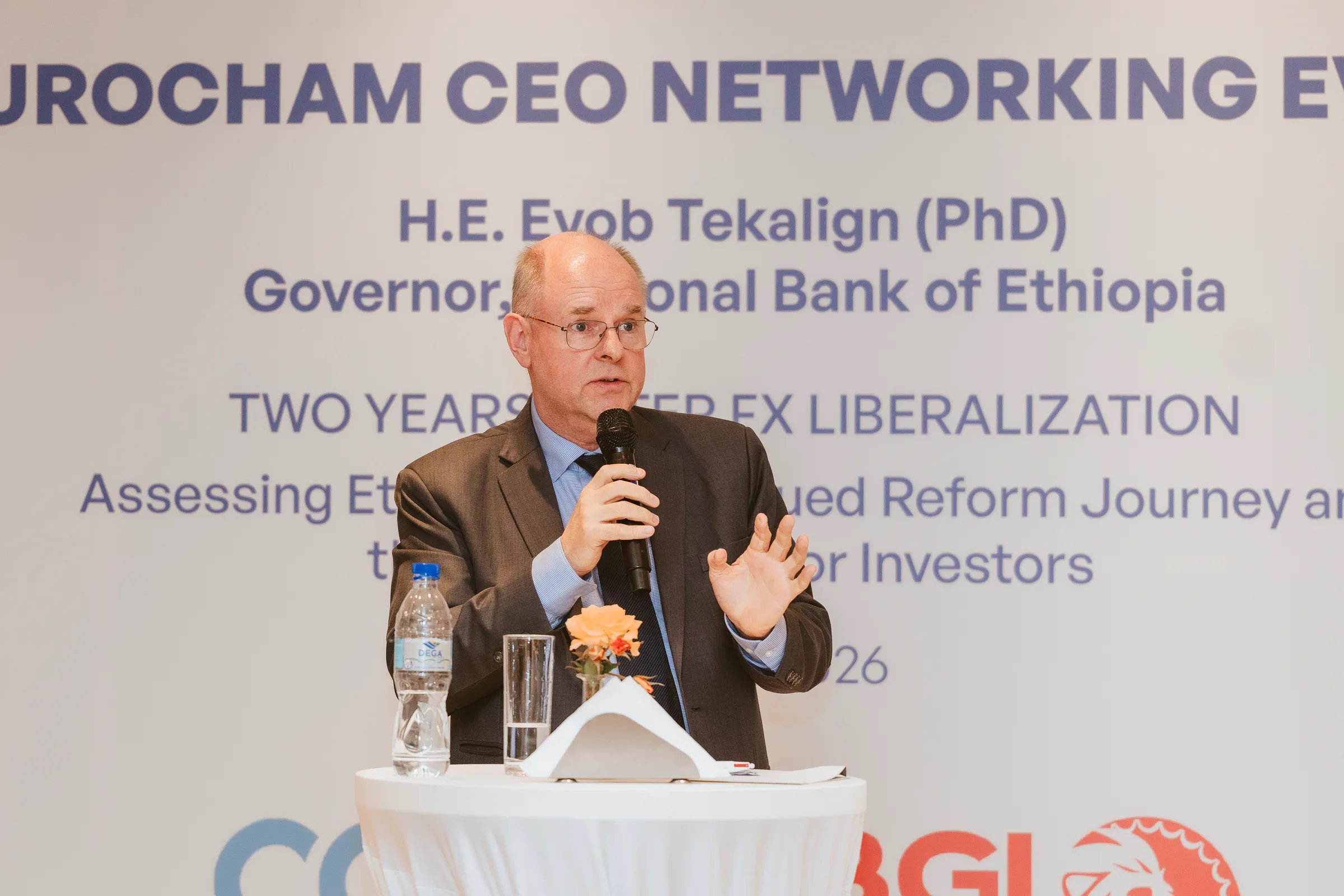
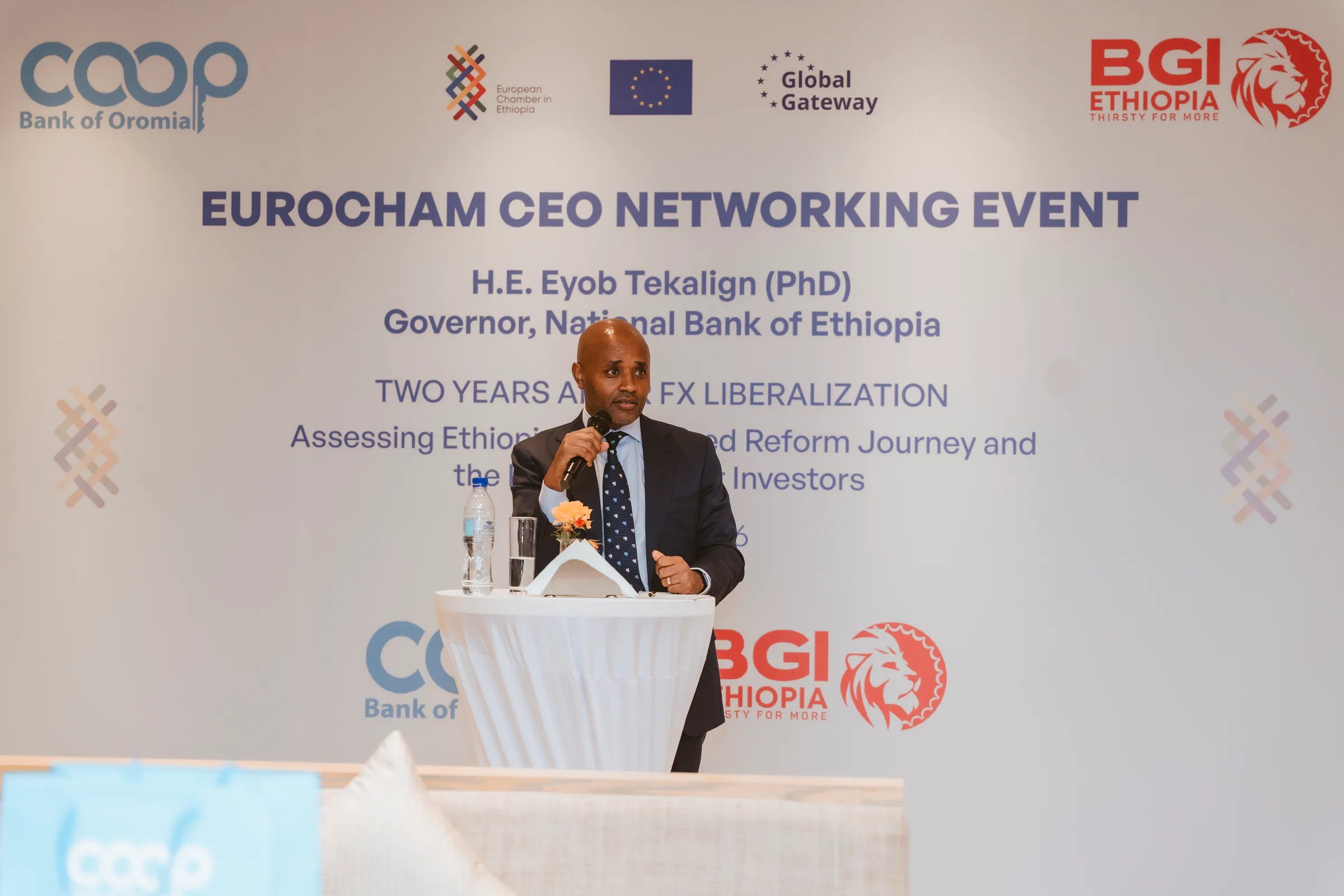
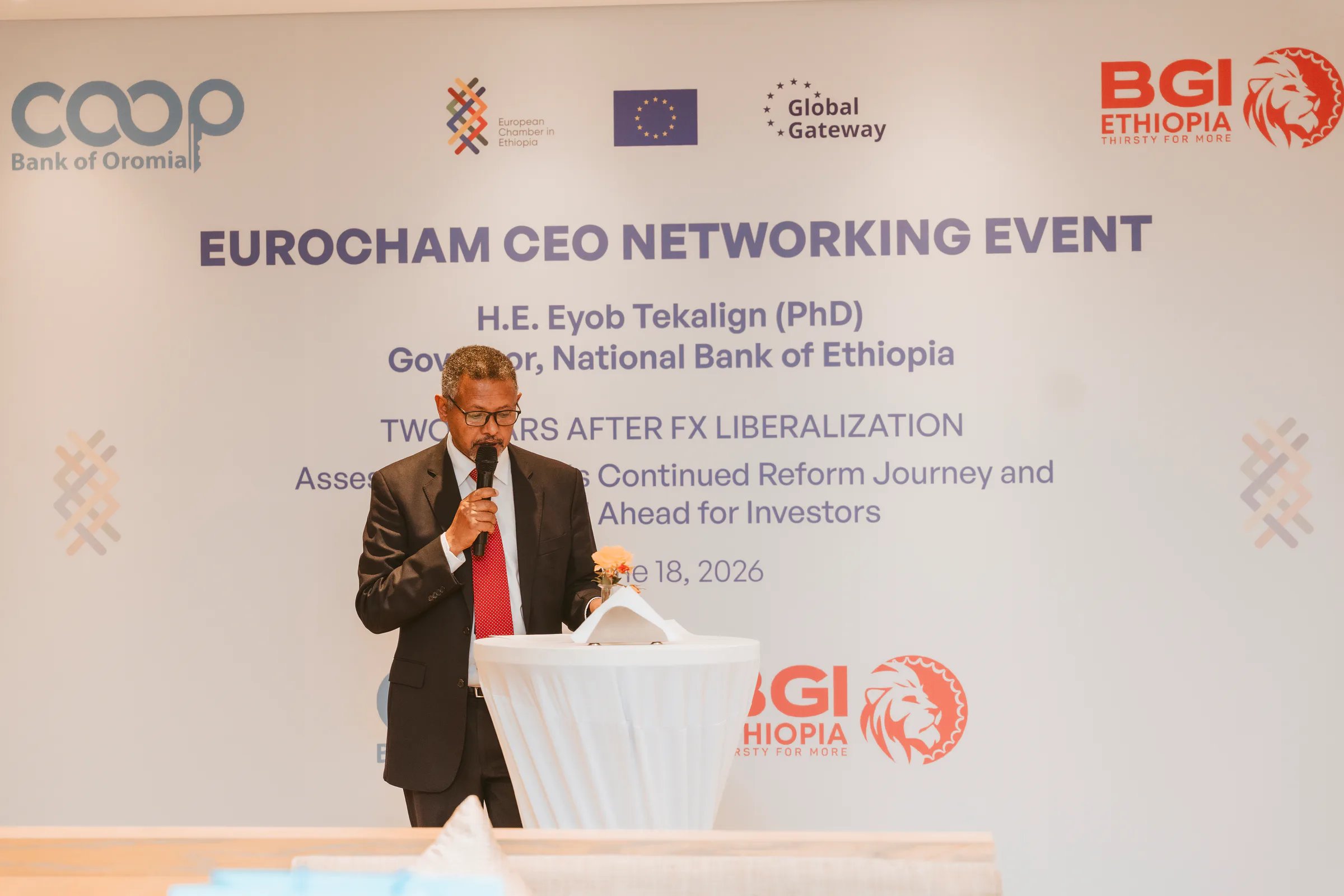
Two years after Ethiopia liberalized its foreign exchange market, the Governor of the National Bank of Ethiopia, H.E. Eyob Tekalign (PhD), says Ethiopia’s financial reforms have moved beyond policy announcements to the more difficult task of implementation. Speaking at a CEO Networking Event hosted by the European Chamber in Ethiopia on 18 June 2026, the Governor updated investors on the progress achieved, the challenges that remain, and the policies that will shape the next stage of reform.
Rather than delivering a formal presentation, Governor Eyob devoted most of the session to answering questions from business leaders. He described Ethiopia’s reform agenda as “a very thoughtful systemic overhaul” rather than a series of isolated policy adjustments. He explained that the Homegrown Economic Reform Agenda had pursued macroeconomic stability, structural reforms, and sectoral transformation simultaneously instead of addressing individual economic challenges in isolation.
The Governor highlighted the pace of digital financial services as one of the most significant developments within the financial sector. Digital transactions have grown to more than 19 trillion birr, illustrating the rapid expansion of electronic payments across the banking system.
Governor Eyob also presented indicators showing improved financial sector stability. Non-performing loans remain below the National Bank’s 5% prudential threshold at approximately 3.3%, while capital adequacy across the banking industry stands well above regulatory requirements. He noted that reforms undertaken at the Commercial Bank of Ethiopia had reduced systemic financial risks and strengthened overall stability within the banking sector.
Foreign direct investment also featured prominently in the discussion. The Governor stated that Ethiopia has become Africa’s second-largest recipient of foreign direct investment according to current measurements, while acknowledging that improvements to statistical methodologies may reveal even stronger investment performance in the future. He also pointed to growing diversification in both the origin of investment and the sectors attracting capital.
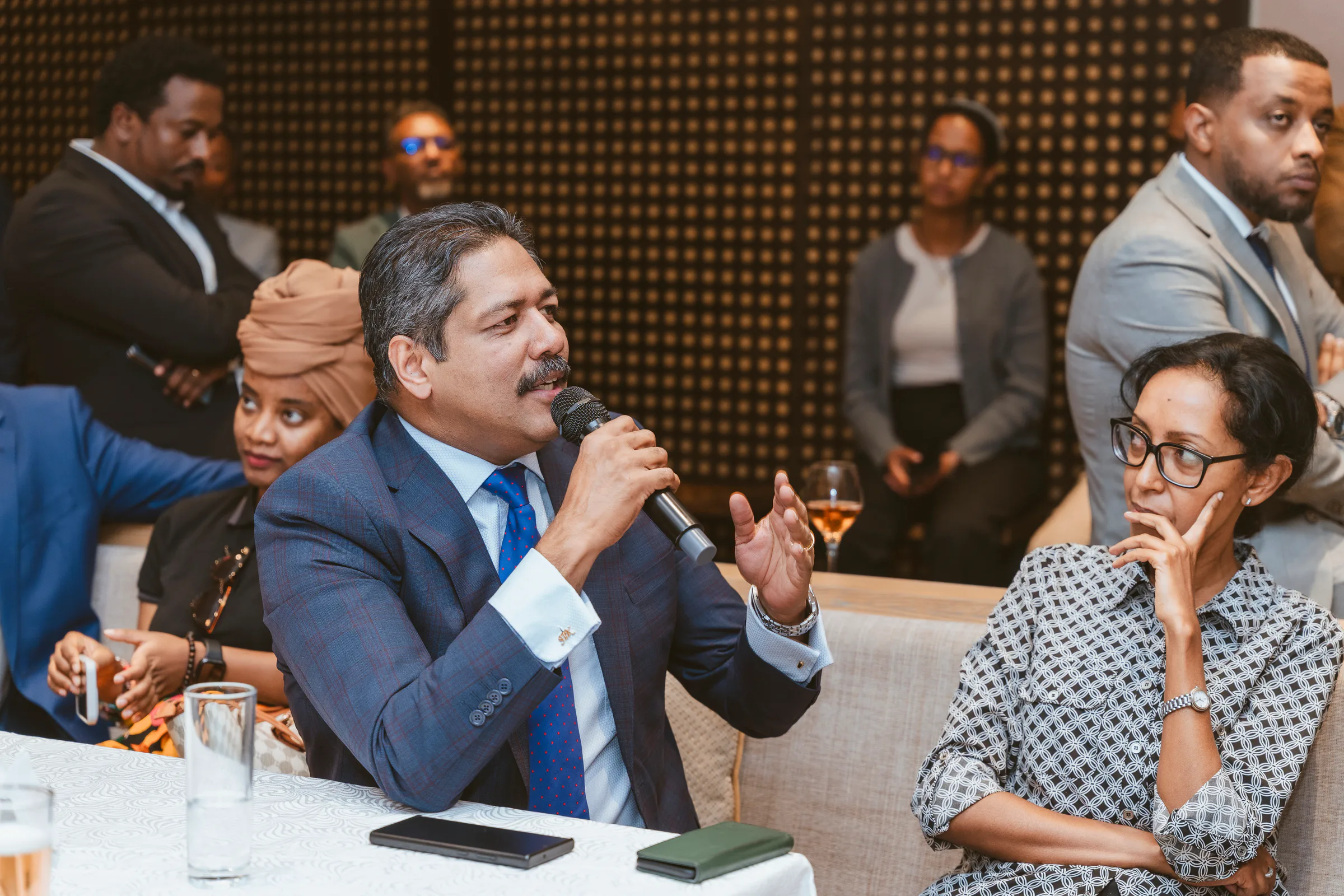
The interactive discussion allowed business leaders to raise practical concerns regarding local liquidity, interbank foreign exchange trading, export surrender requirements, foreign investment in the banking sector, fintech participation, Francovaluta procedures, and Ethiopia’s accession to the World Trade Organization.
Responding to questions on liquidity, Governor Eyob acknowledged that current credit restrictions represent a temporary policy trade-off designed to reduce inflation, which has declined from above 30% to single digits. He emphasized that the National Bank intends to gradually transition toward a fully market-based monetary policy framework as macroeconomic conditions improve.
Questions on foreign exchange reforms focused on the development of the interbank FX market. The Governor confirmed that the National Bank has begun enforcing stricter net open position requirements, penalizing banks that retain excess foreign currency rather than supplying the market. He said additional digital infrastructure, training, and regulatory measures would be introduced from July to deepen market liquidity.
On export proceeds, the Governor noted that surrender requirements have already been removed for service exports while commodity exports currently remain subject to a 50% surrender requirement. He indicated that the long-term objective is to eliminate mandatory surrender altogether once the interbank foreign exchange market becomes sufficiently deep and liquid.
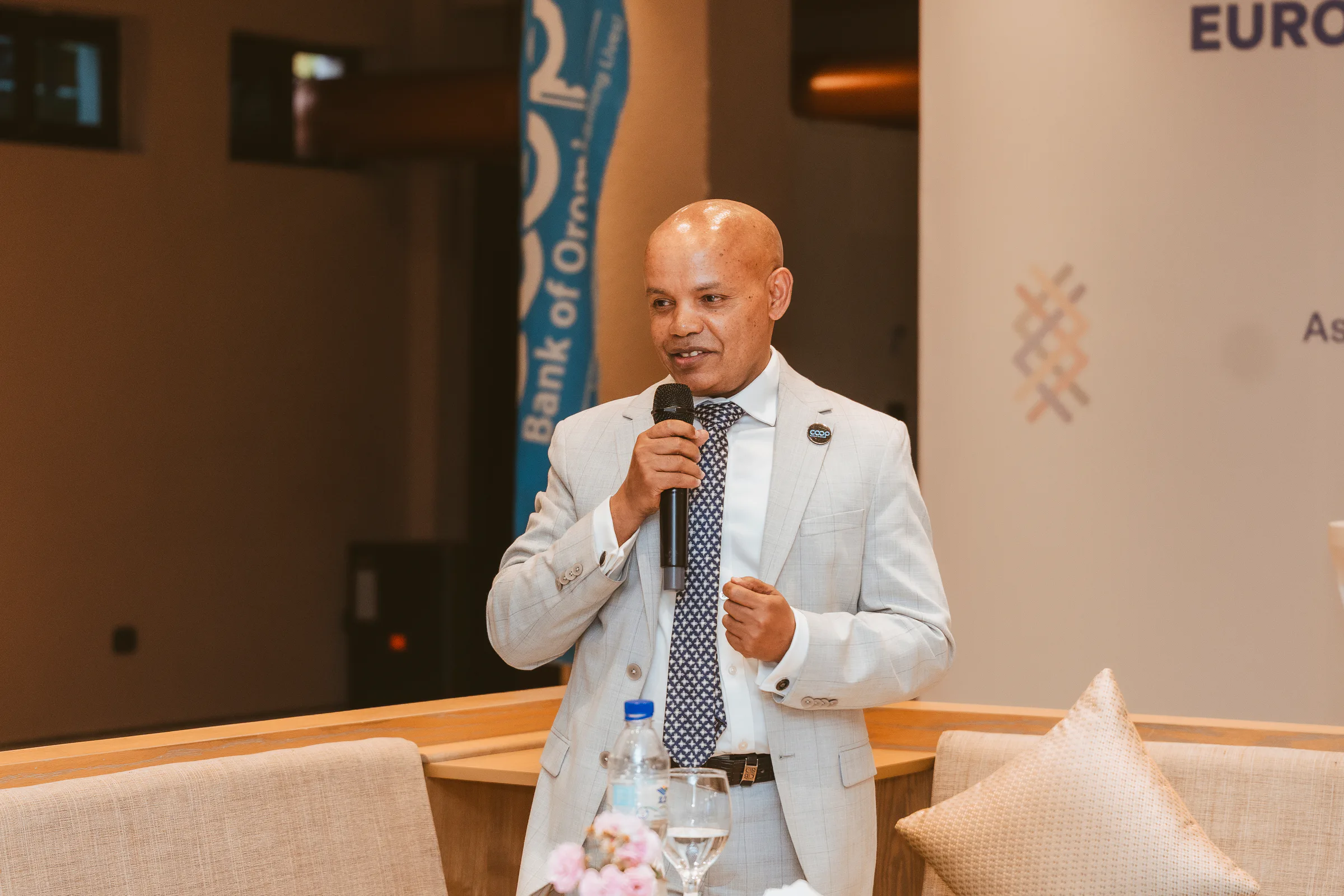
Business leaders also welcomed the opportunities created by recent reforms. Deribie Asfaw, Chief Executive Officer of Cooperative Bank of Oromia, described the transformation as unprecedented during his banking career. He noted that Ethiopian banks now hold hundreds of millions of dollars in correspondent accounts abroad and can provide international banking services that were previously unavailable. He also highlighted the bank’s rapid expansion to 17 million customers, 22 million digital wallet users, and digital lending services that reach more than three million borrowers.
The event concluded with remarks from Daniel Hachez, Head of Cooperation at the European Union Delegation to Ethiopia, who emphasized that investor confidence depends on stability, credibility, and predictable institutions. He described the ongoing reform process as a long-term transition toward a more market-oriented economy and reaffirmed the European Union’s support for Ethiopia’s continued economic reforms and public-private dialogue.
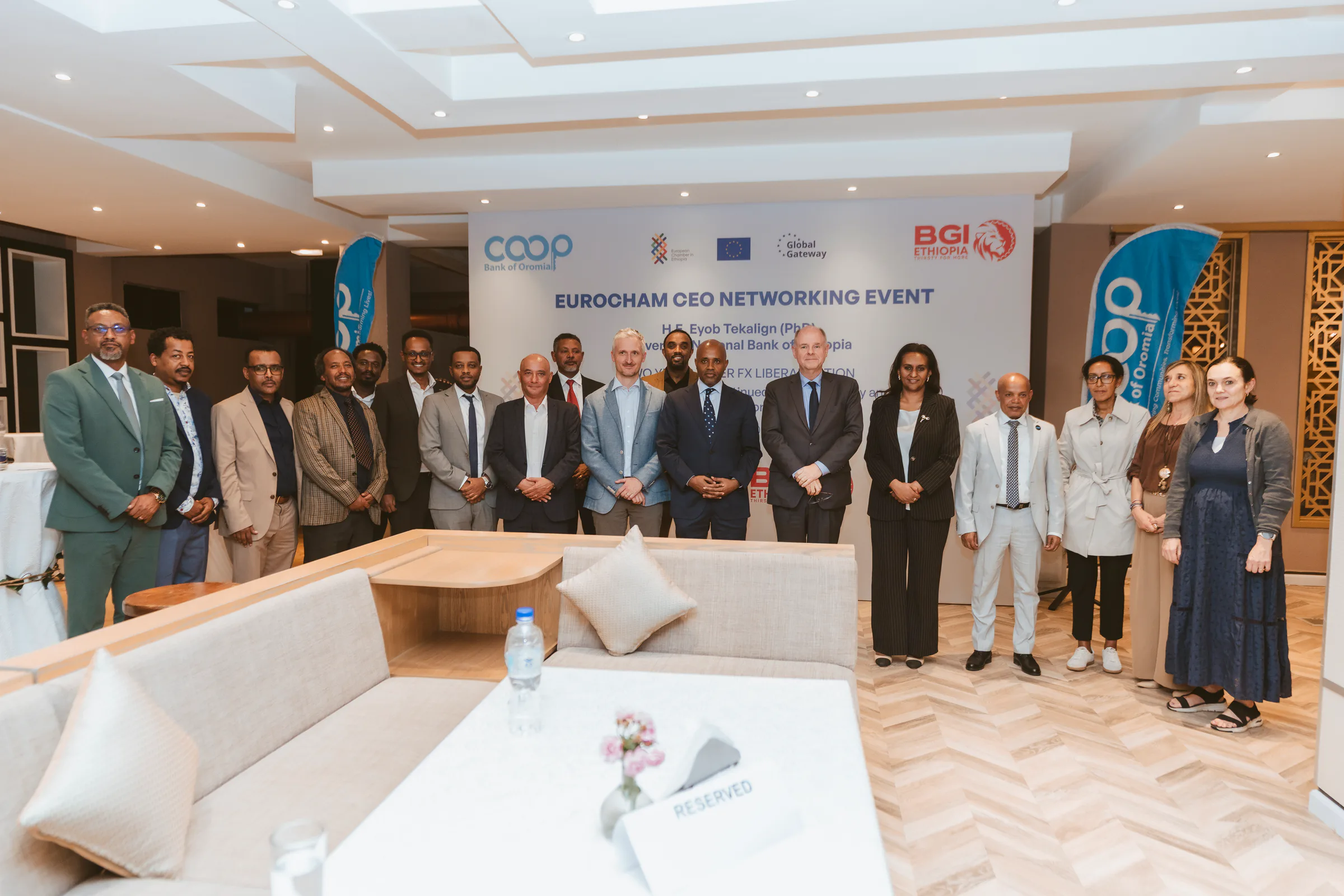
The CEO Networking Event formed part of EuroCham’s broader efforts to facilitate constructive engagement between government institutions and the private sector. Through direct dialogue, businesses received detailed updates on Ethiopia’s evolving financial reforms while policymakers gained immediate feedback on the operational challenges companies continue to face across the economy.